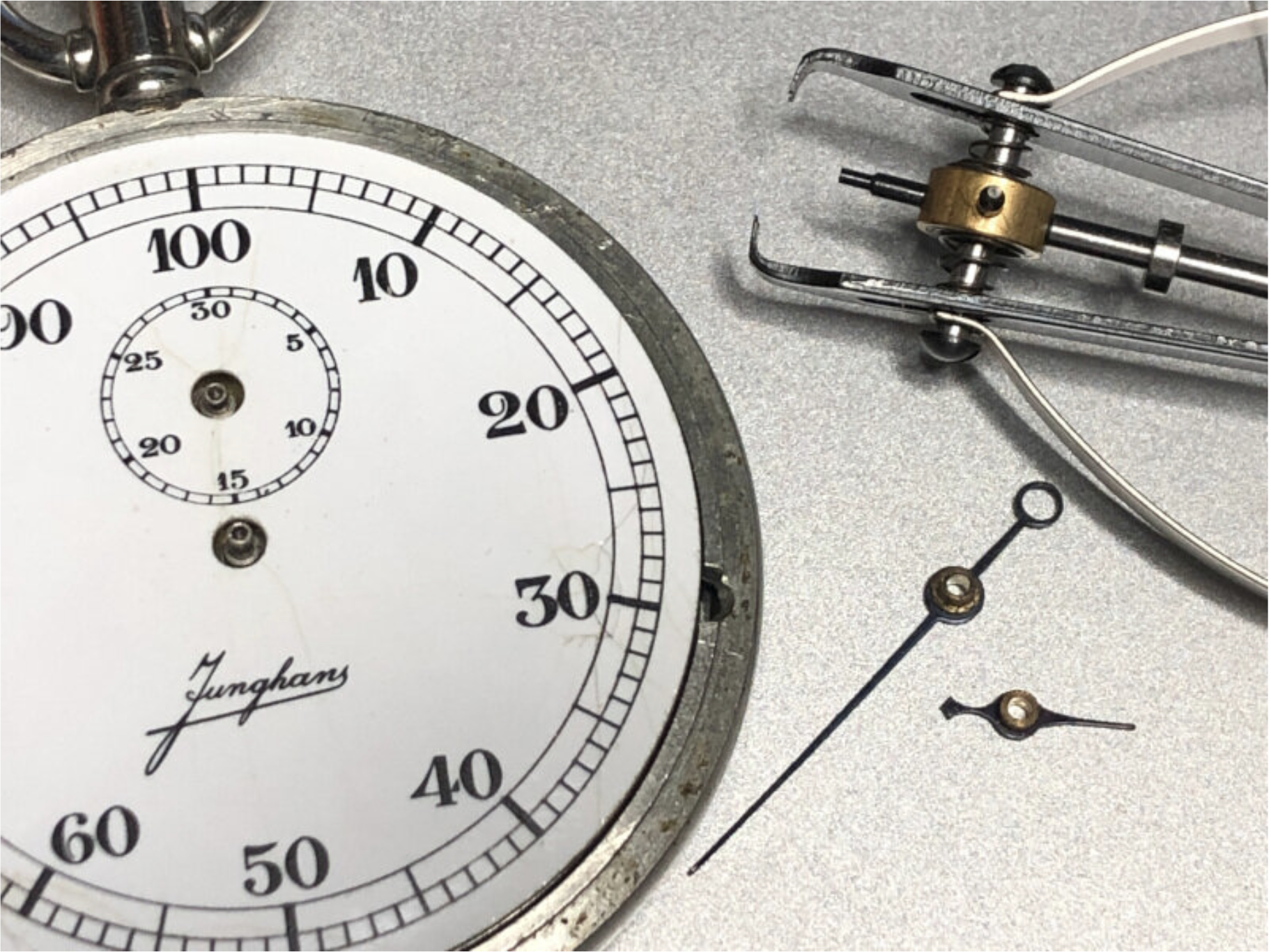
Junghans J29
- Kind:
- Timing Watch
- Production:
- J29 - 1925 - 1929
J29a - 1930 - 1950
J29a Stossgeschützt - 1952
J29b - 1935
J29c - 1944
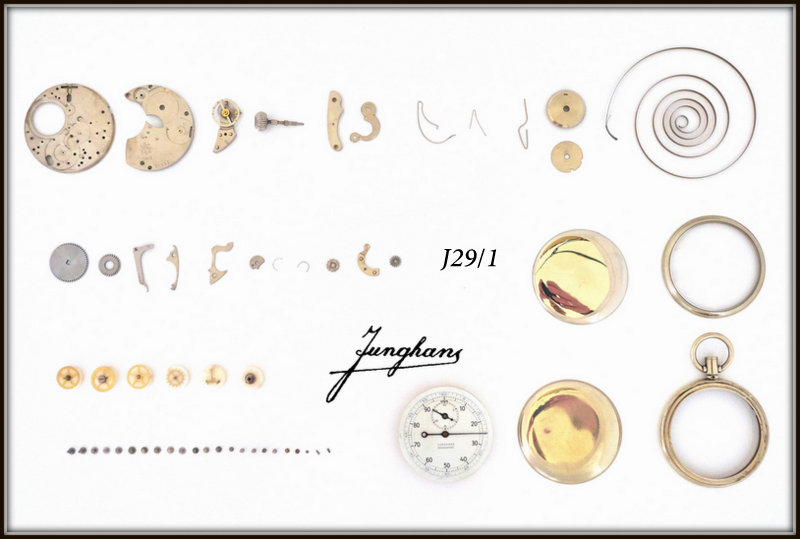
J29/1 - 1950 - 1953
J29/TI - 1950 - 1953
J29a/II - 1950 - 1953 - Type:
- Open face
- Variants:
- J29 ist. and 2nd version
J29a, J29a Stossgeschützt
J29/1, 329/11, J29a/I1 - Catalog Group:
- 108
- Size:
- 18,5"
- Outer Diameter:
- 42,5 mm
- Nominal Diameter:
- 41,4 mm
- Height:
- 7,8 mm
- lip:
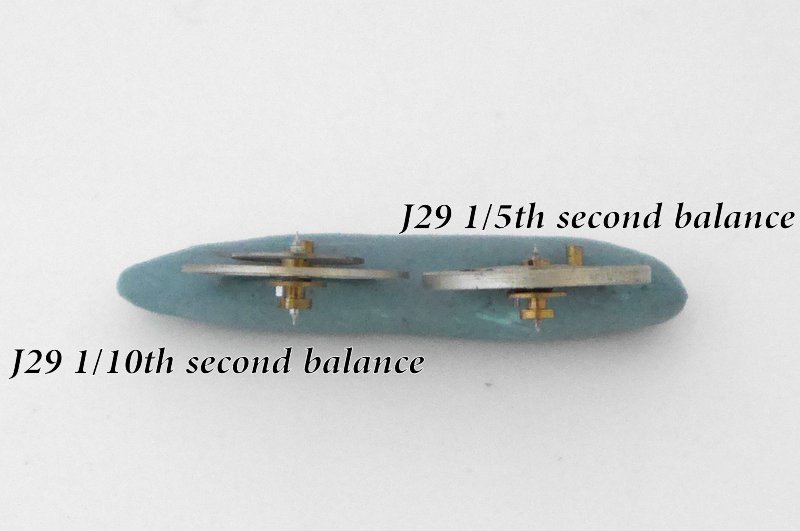
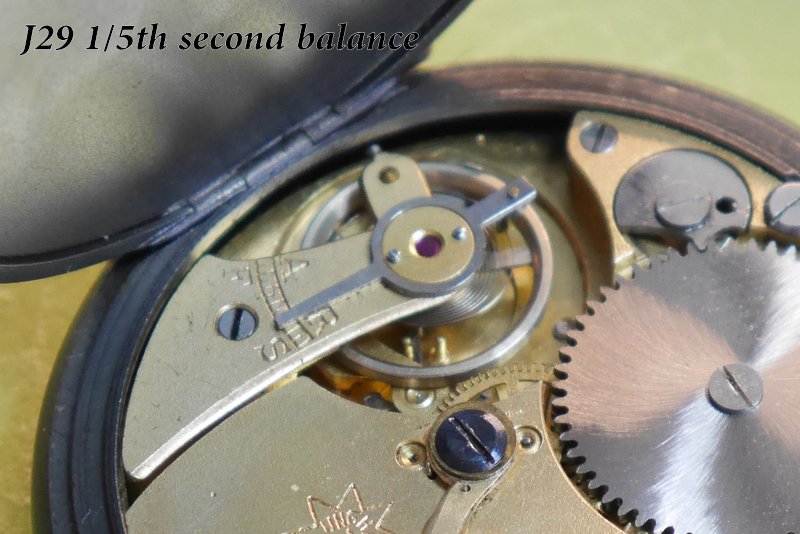
- 1/5 sec. = 18000 A/h
1/10 sec. = 36000 A/h - Balance staff:
- U425, 428, 1742st
- Stem:
- W1723, 1756
- Mainspring:
- Zf 2,1 mm x 13,5 mm x 0,13 mm
Junghans mentions spring # 1005
515 x 2,15 x 0,13 mm - Reference picture:
- F.W.S 1952 page 46
- Movement weight:
- 43g
- Weight complete:
- 78g
- Jewels:
- J29 40r7
J29a 4
J29b 7
Junghans Neuheiten catalog 1925
Junghans Timing Watch, Movement J29 with 3 Jewels, compensating hair spring, club theeth eschape wheel, double safety roller, gilt plates.
Case: White metal
Dial: White enamel dial
Bow and crown: White metal

108/1, White metal, plain, 18 1/2''', 1/2 bass.
Junghans catalog 1927
J29, Timing watch movement, 4 jewels, compensating hair spring, club teeth escapement, double safety rollerJunghans catalog 1934
J29a, Timing watch, bridge movement, 4 jewels, compensating hair spring, club teeth escapement, double safety roller, gilt plates
Registering 1/5th seconds or 1/10th seconds.Junghans catalog 1950
Timing watch, bridge movement J29a, 4 jewels, Nivarox hair spring, pin pallet escapement, double safety roller, gilt plates
1/5th seconds division, 1/10th seconds division, 1/100 minutes division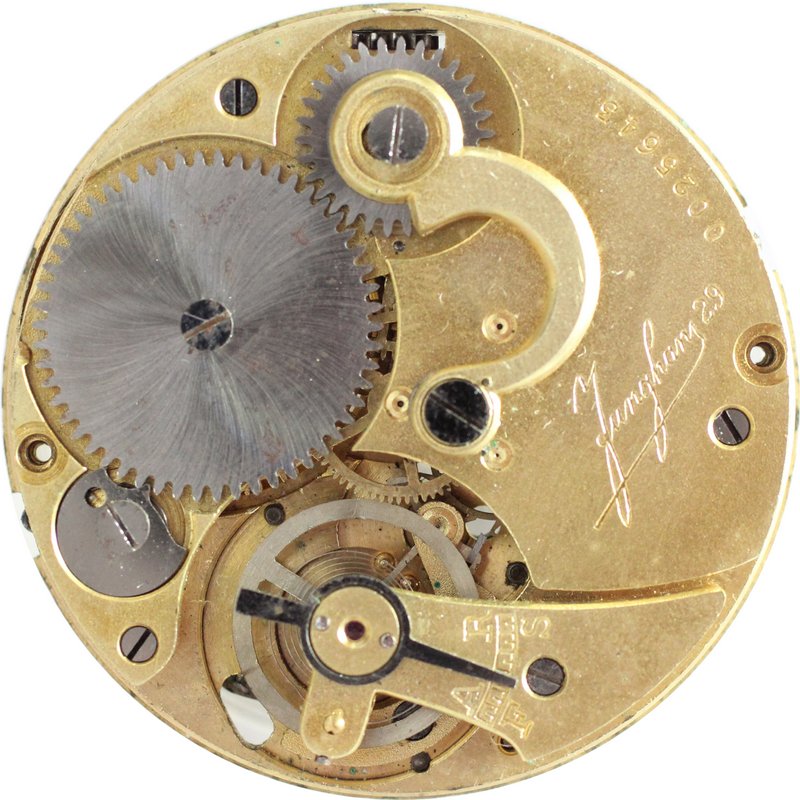 | 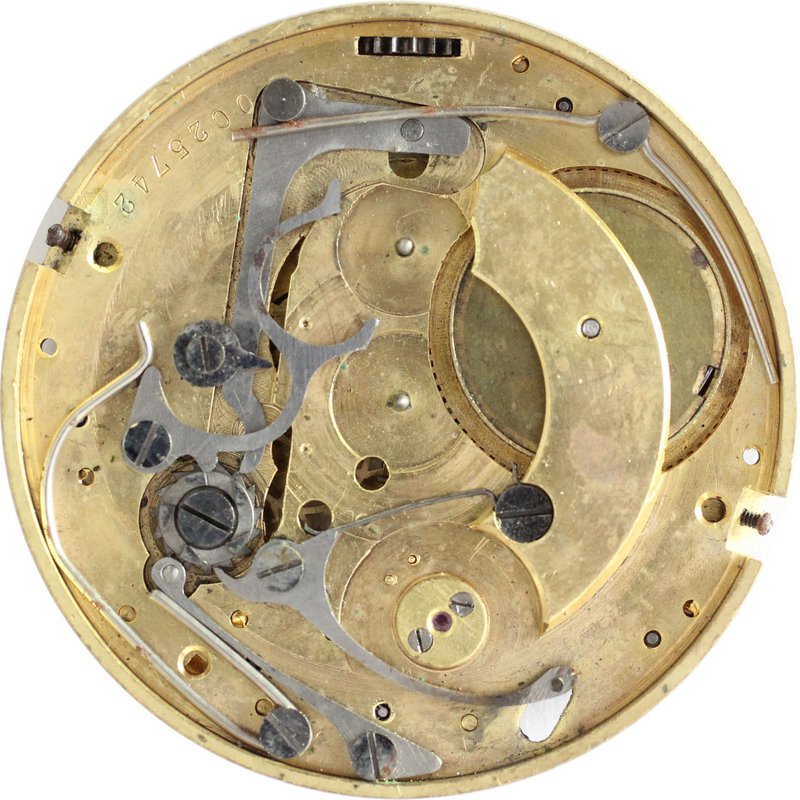 |
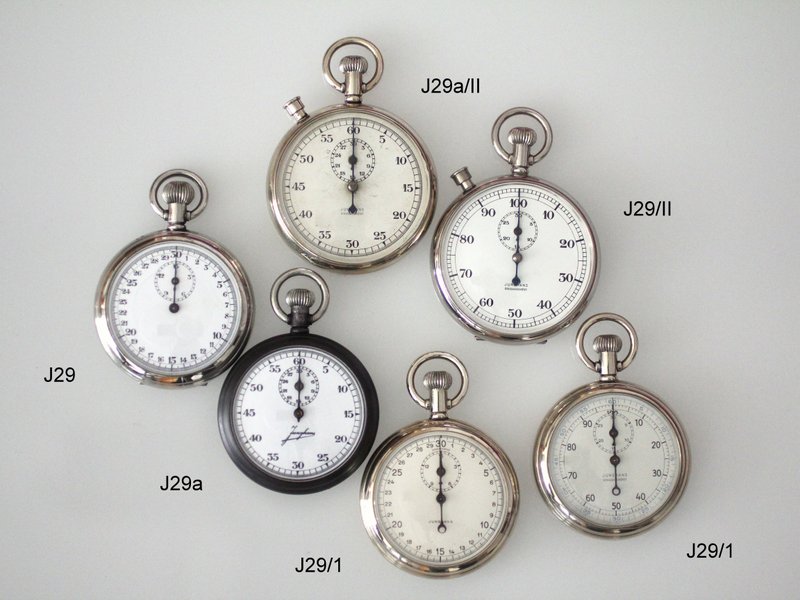
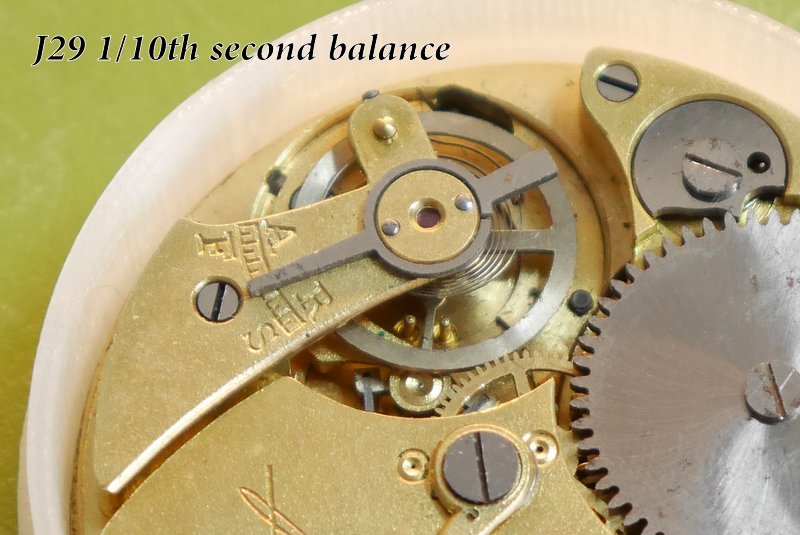
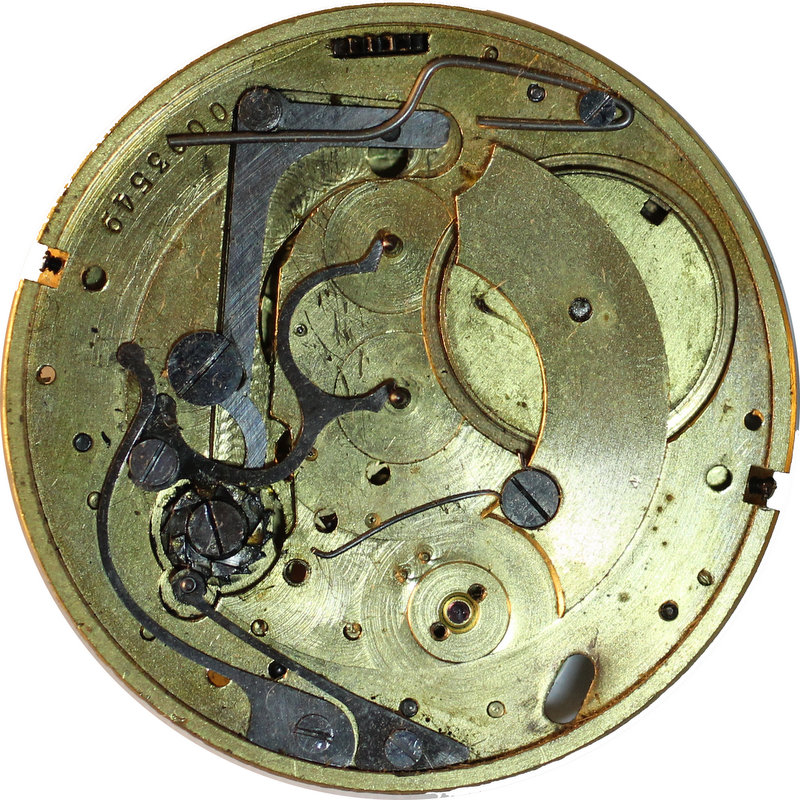 | J29 first edition The operating lever spring is from an J29a, probably as a repair. 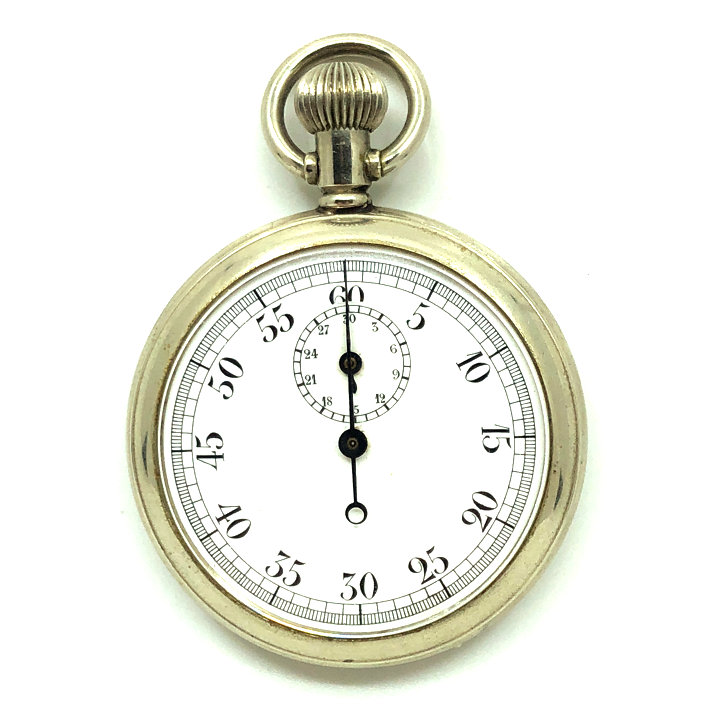 |
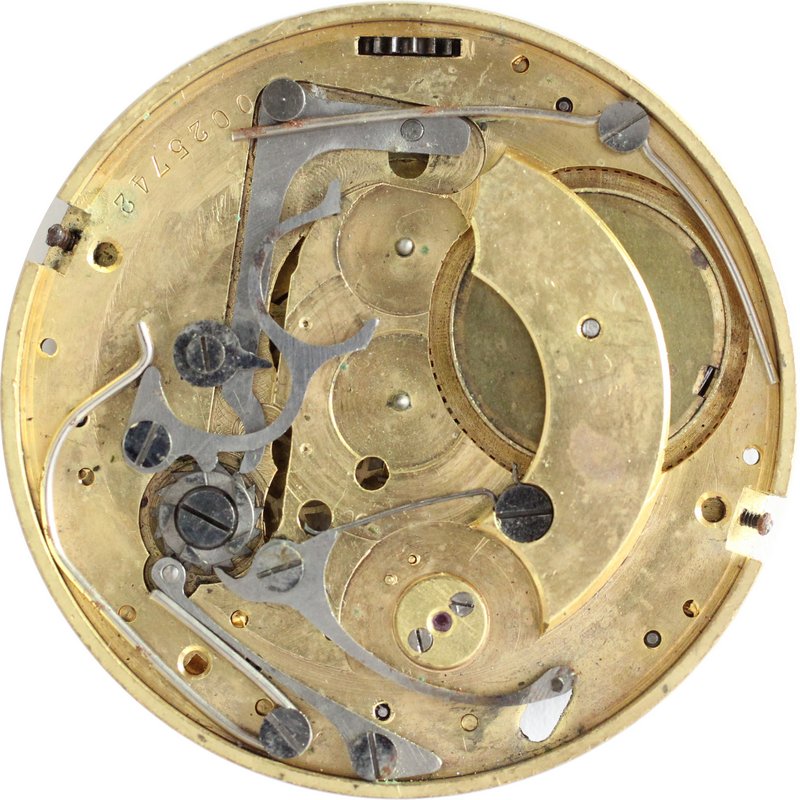 | J29 second edition The change is a new simpler operating lever spring and hammer spring. 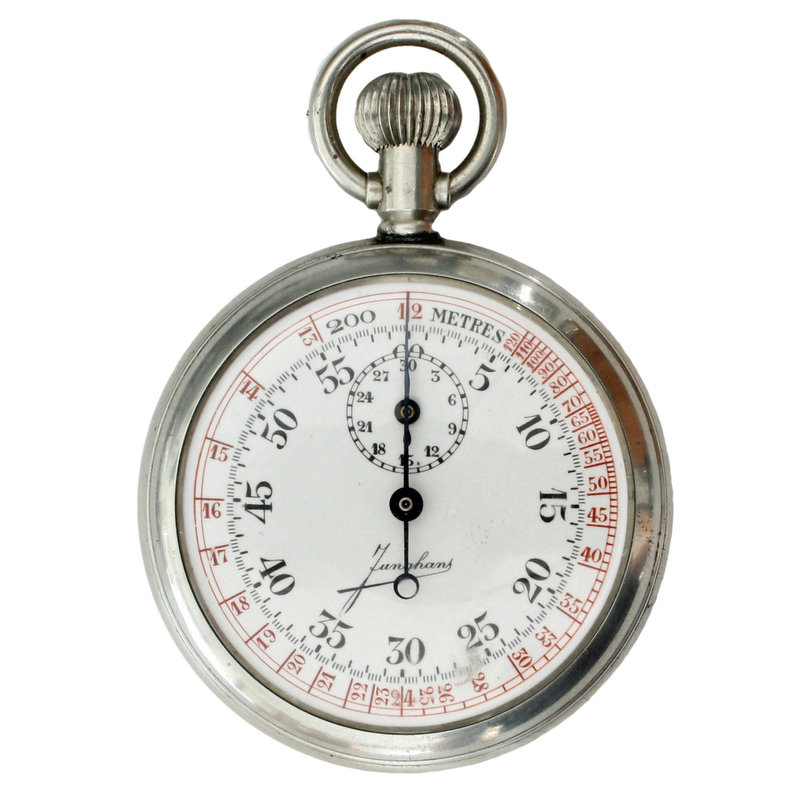 |
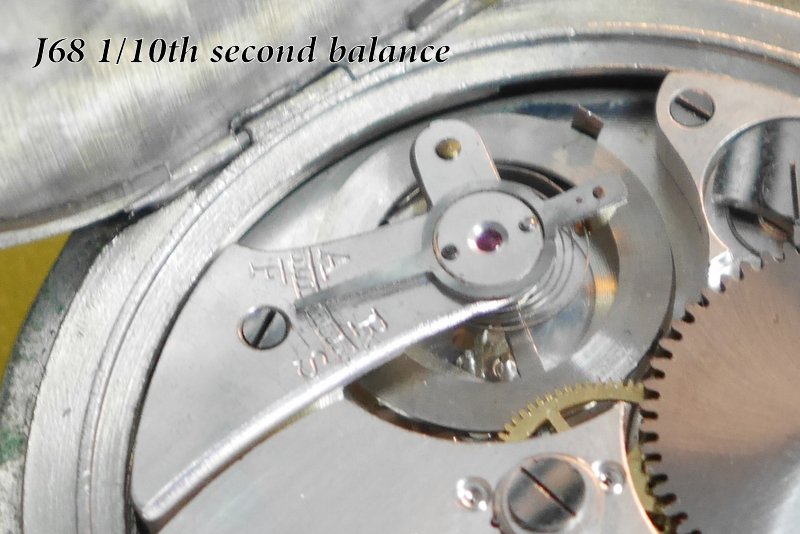
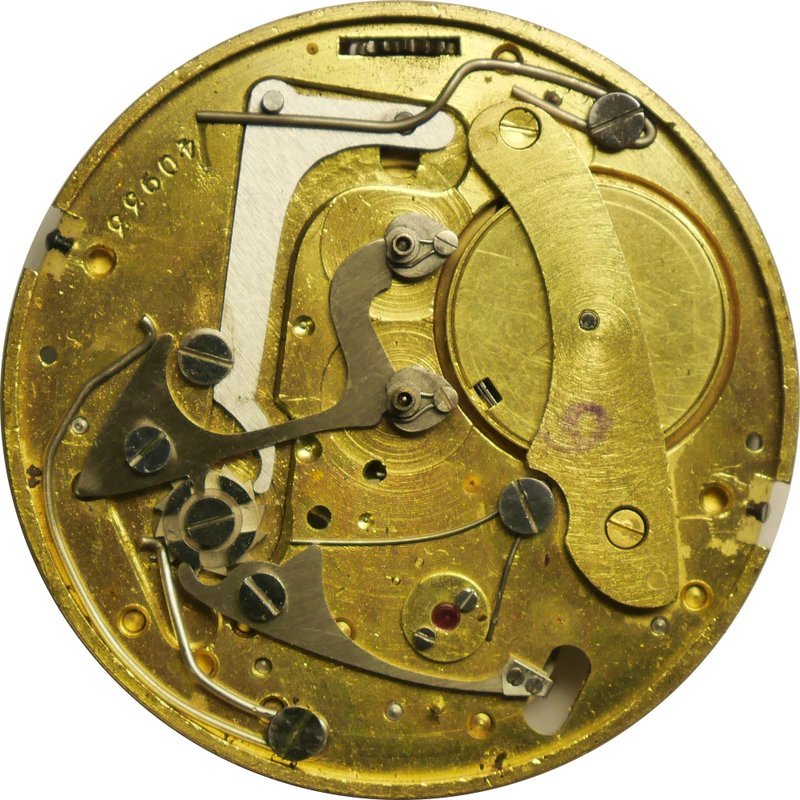 | J29a Multiple parts have been simplified. 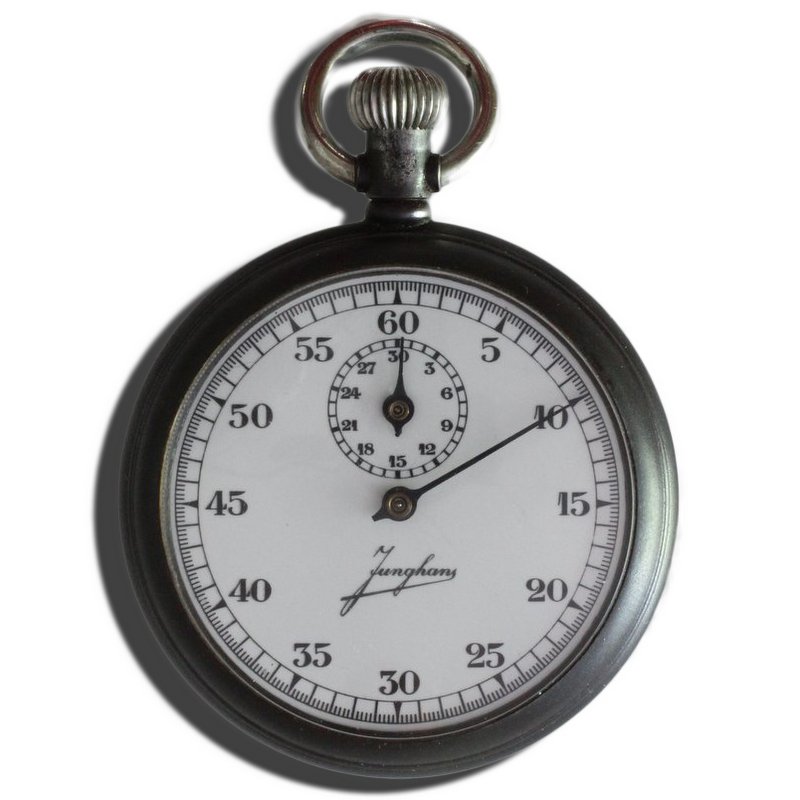 |
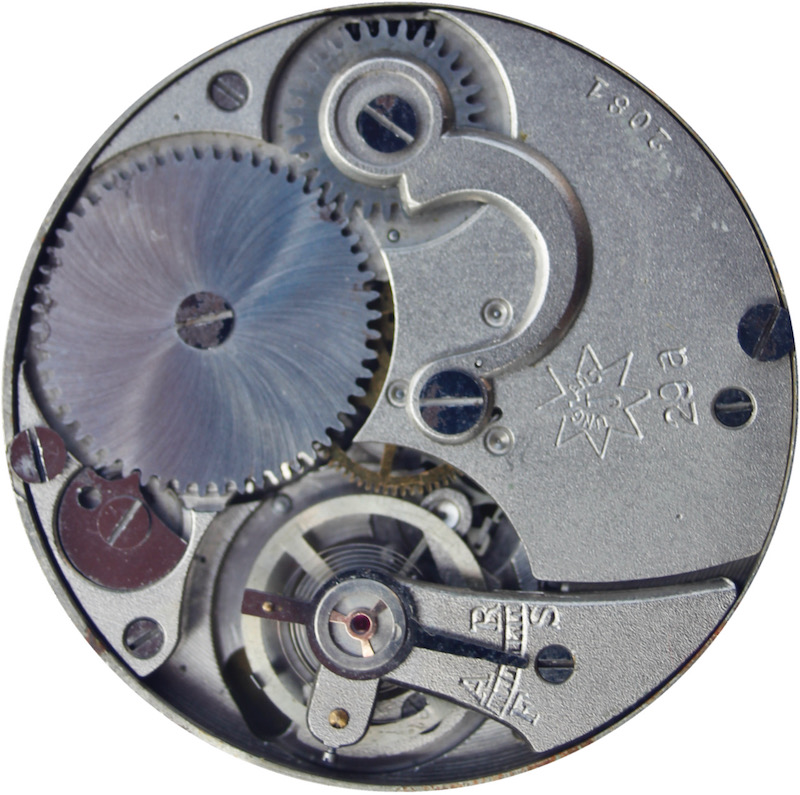 | J29a Stossgeschützt, only reference for the J29a with shock protection is the 1952 catalog entry. Pictures courtesy of Jakob Bastviken, Sweden. 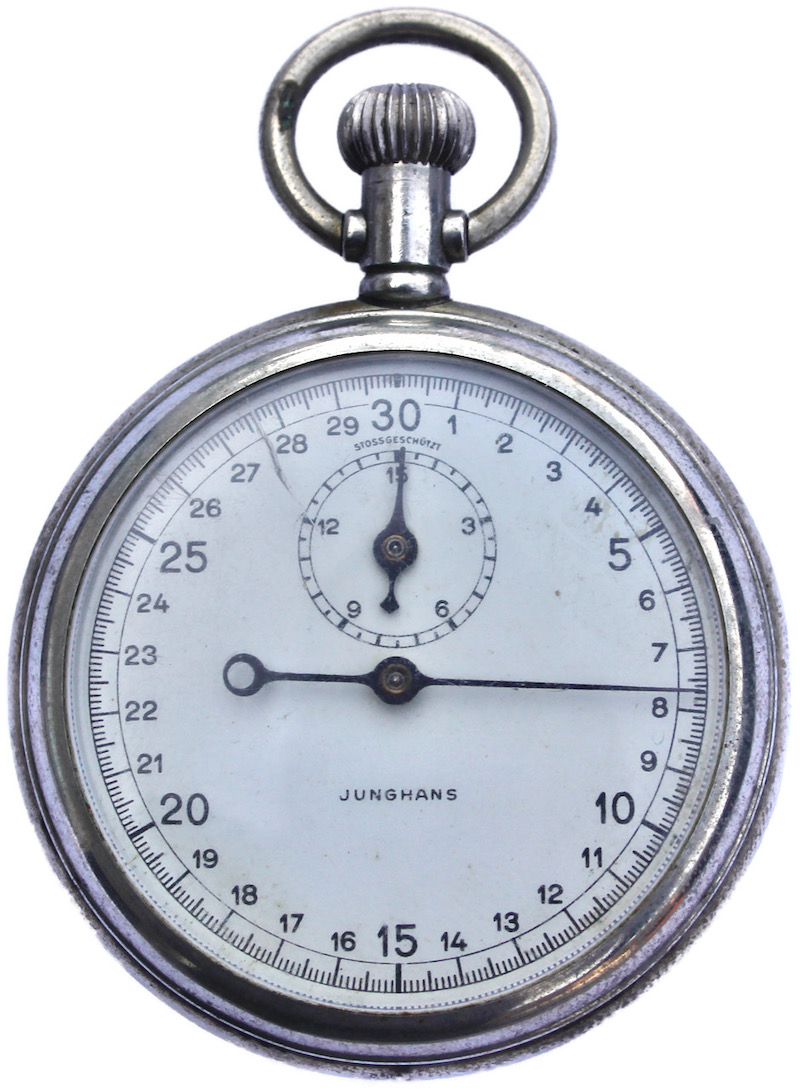 |
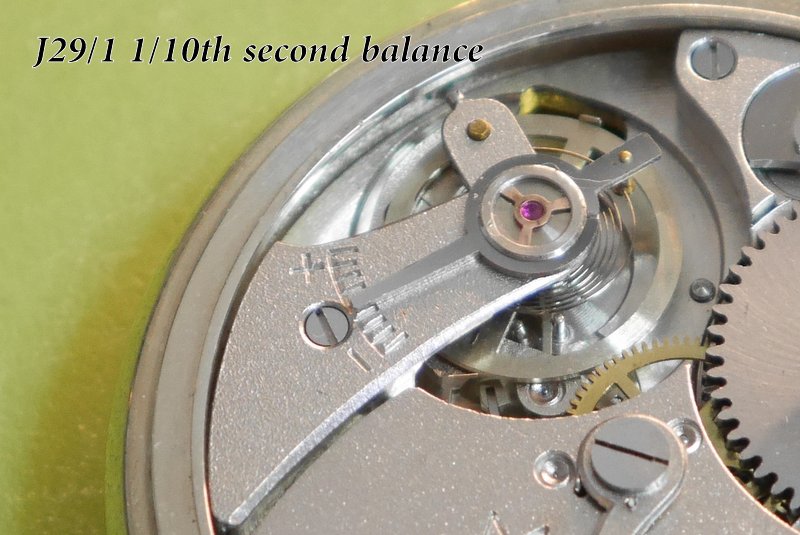
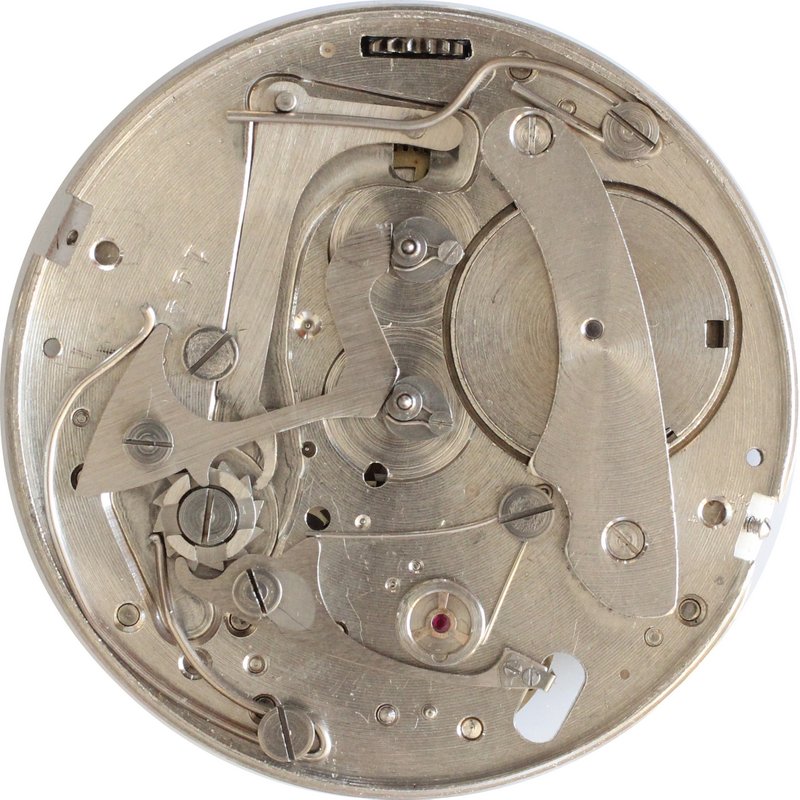 | J29/1 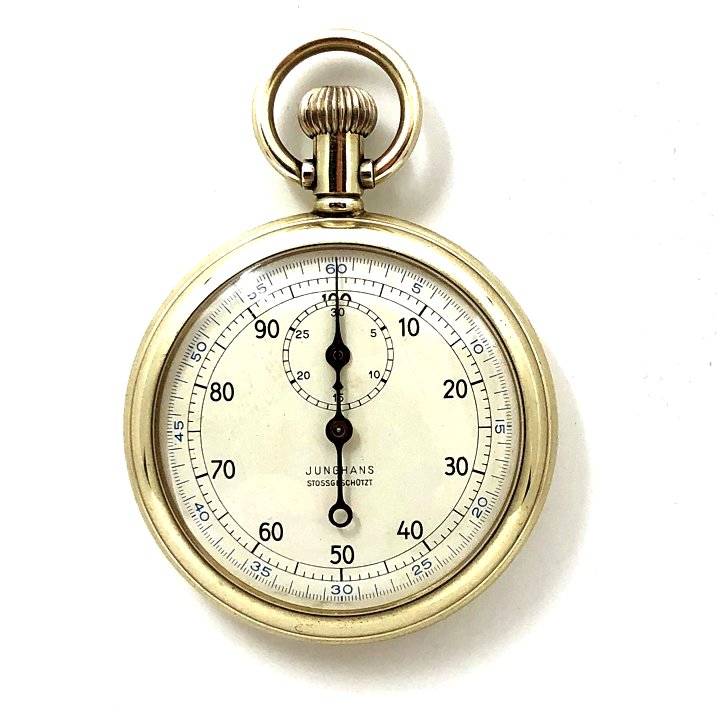 |
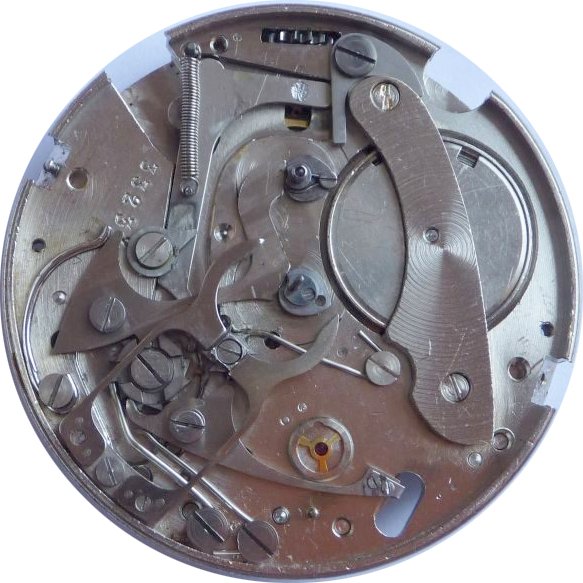 | J29/II 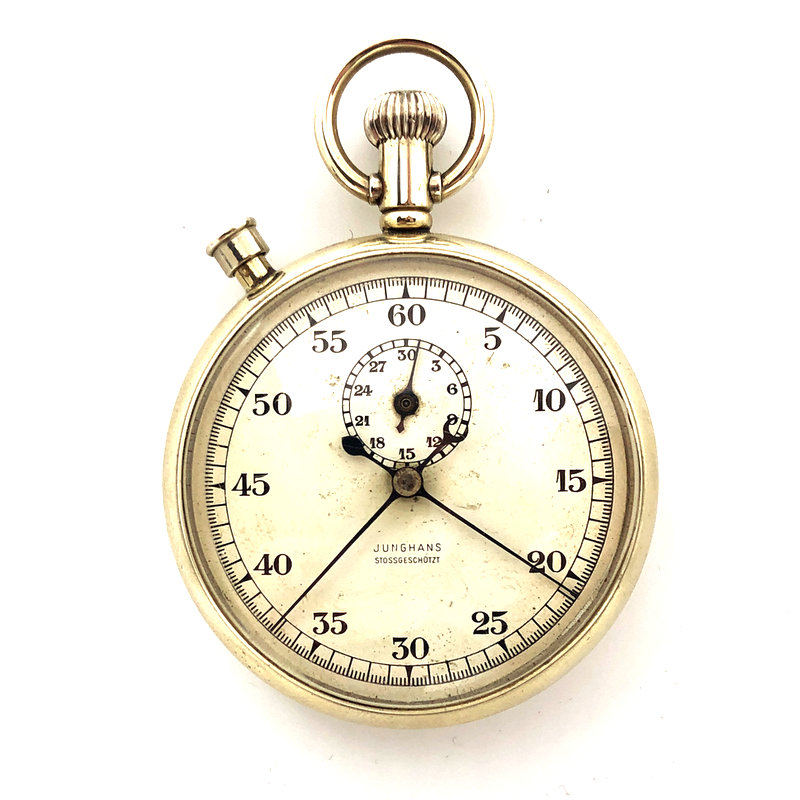 |
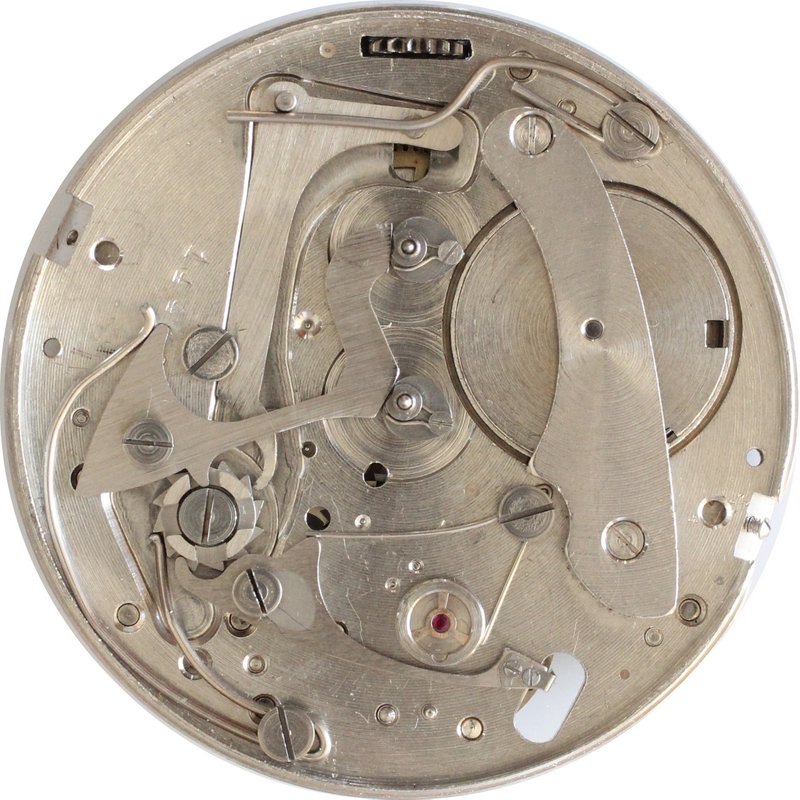 | J29a/II 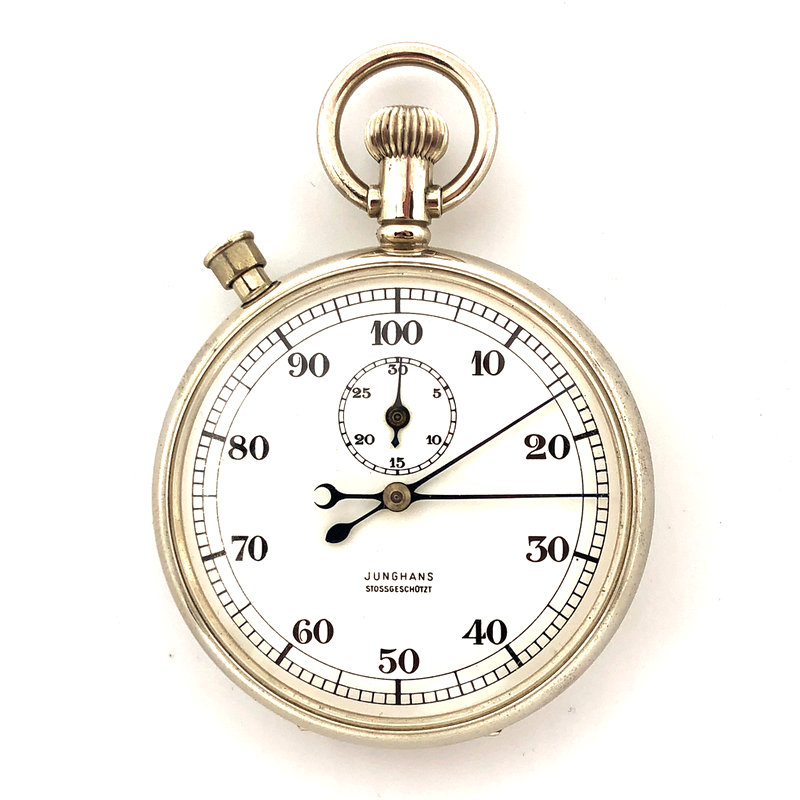 |
| Here is a J29 timing watch with a tachymeter scale for 200 meters. If you follow a runners 200 m race and the runner finishes after 20 seconds you can read the average speed for the race was 36 km/h. | 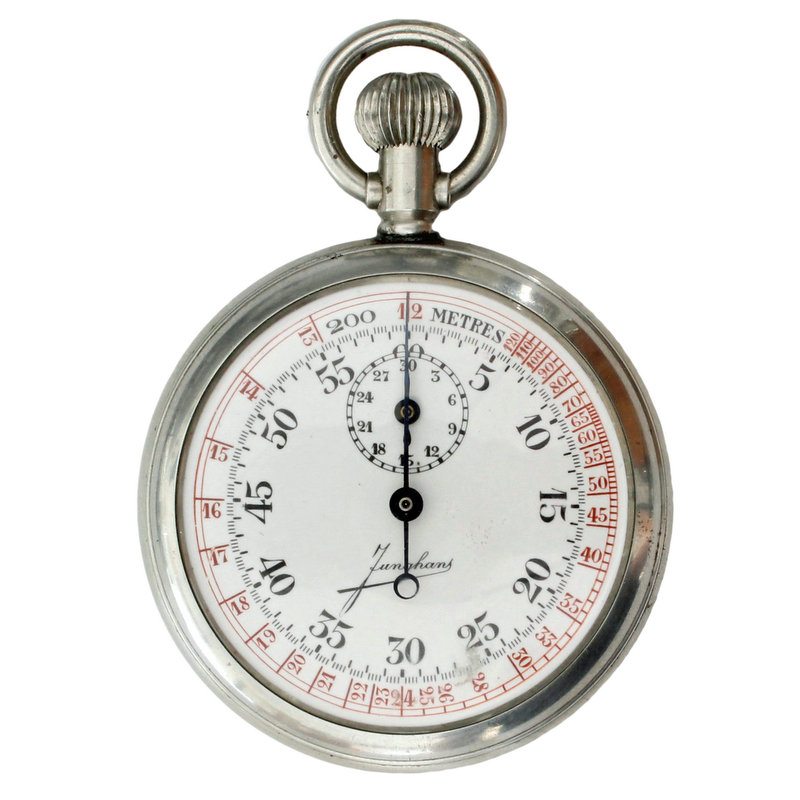 |
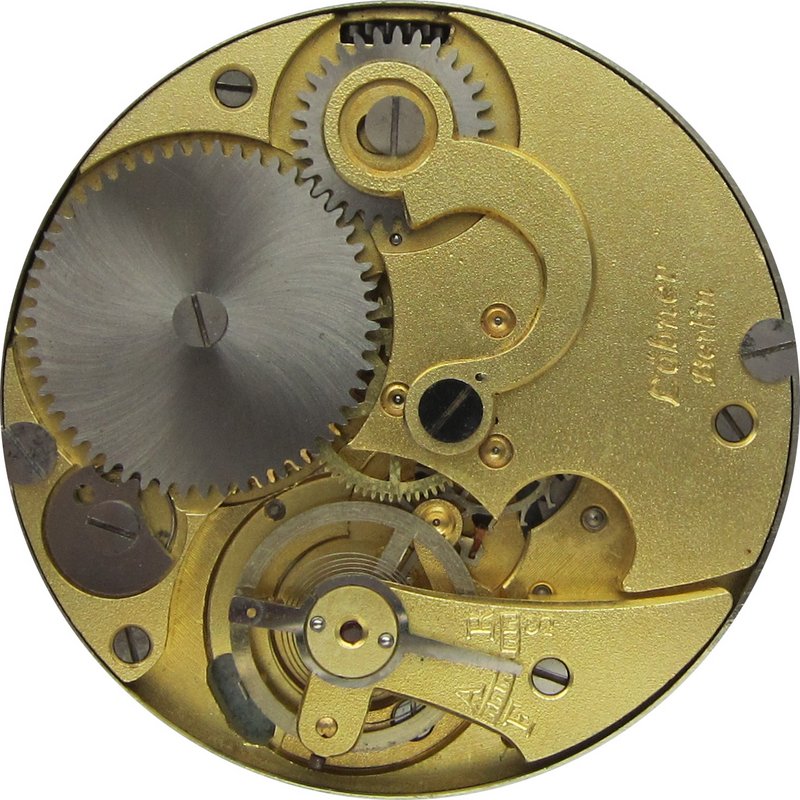
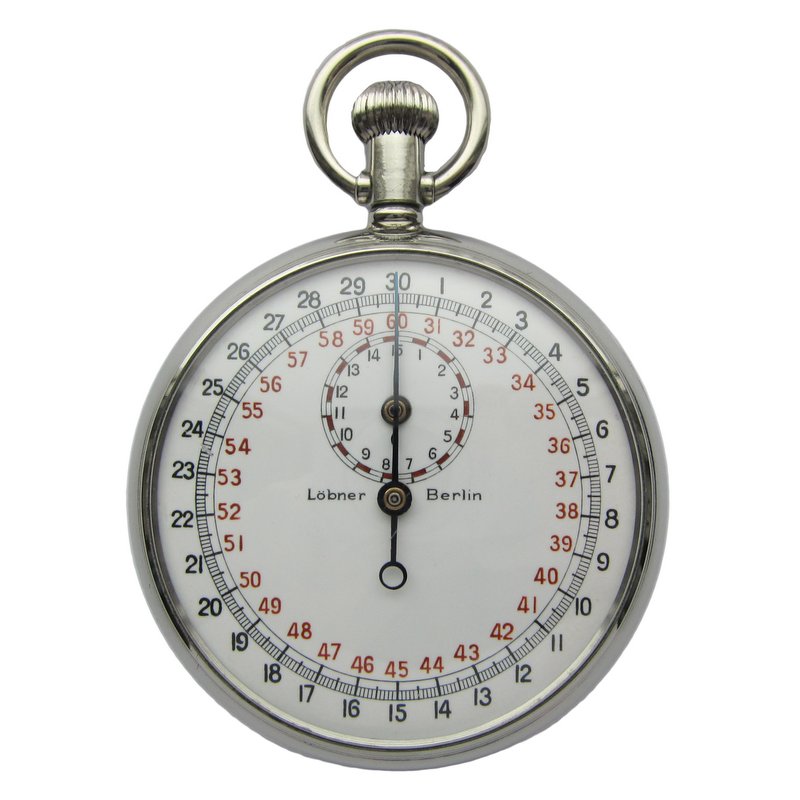
The following pictures are courtesy of F. Fügemann and showing a J29b movement, called "Kaliber Löbner", the movement and the dial signed with Löbner Berlin. It is a J29a with 7 jewels. The main plate is slightly modified. The history of "Uhrenfabrik F. L. Löbner" in Berlin is generally known, but this seems to be a rare find by Mr. Fügemann. | |
 |  |
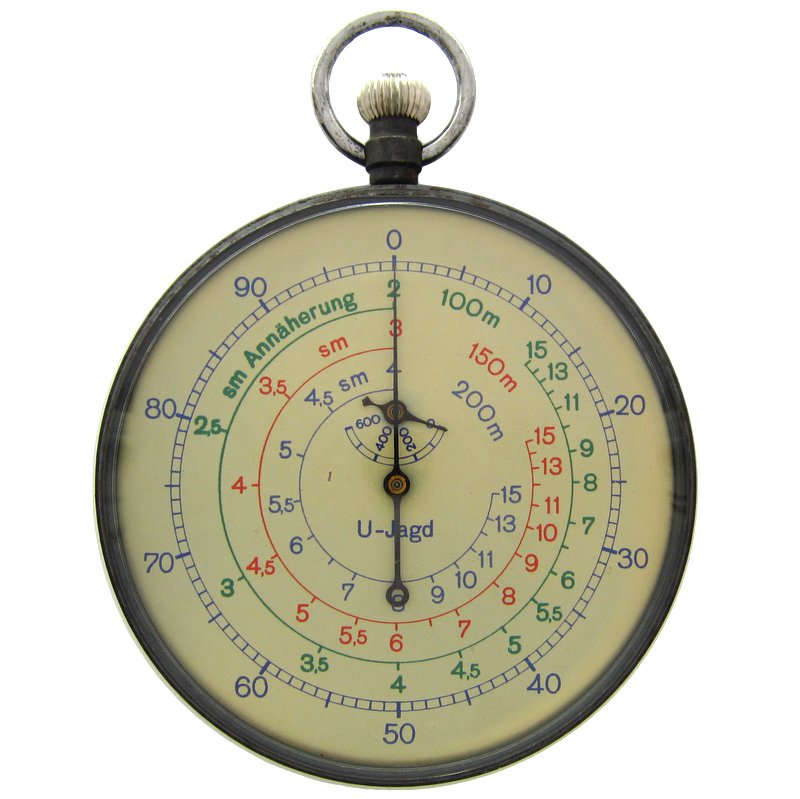
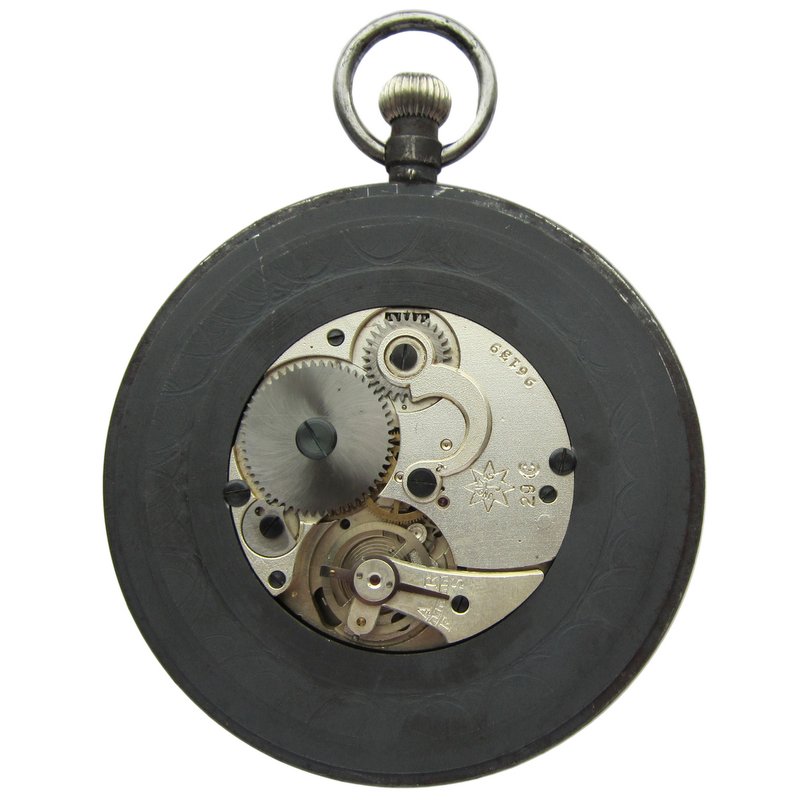
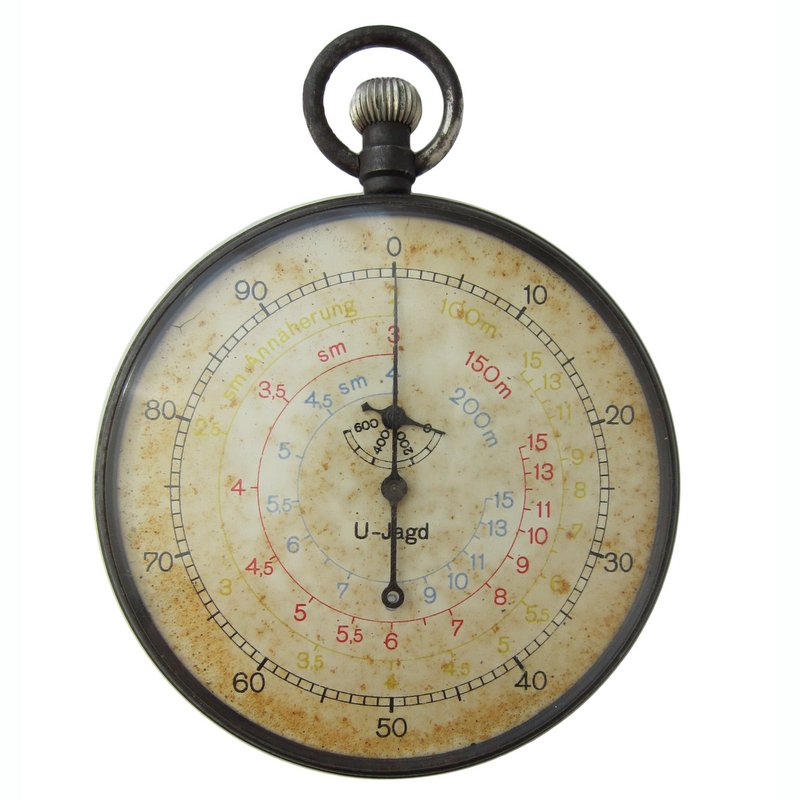
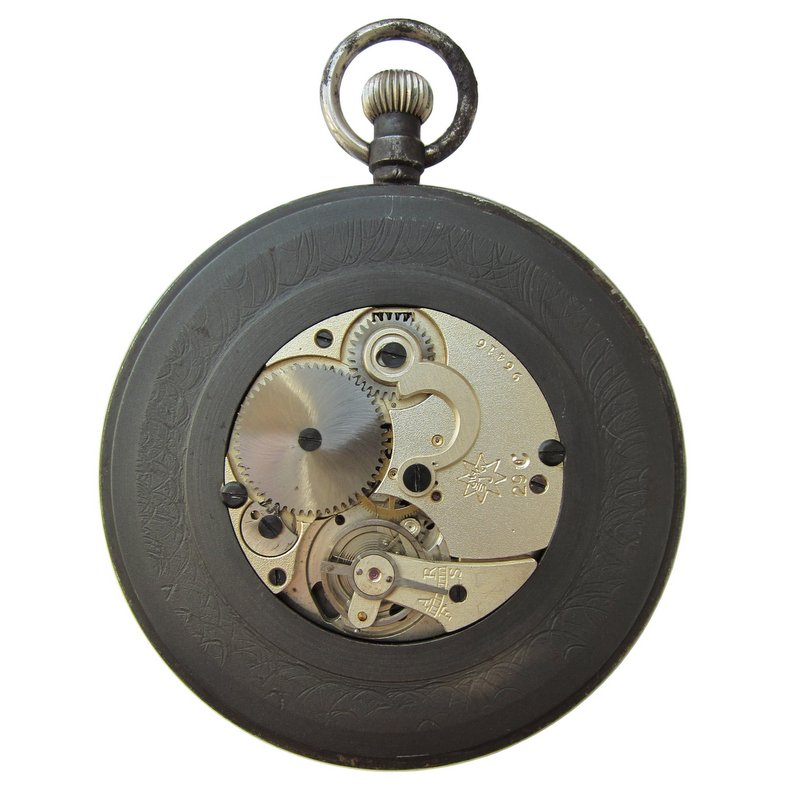
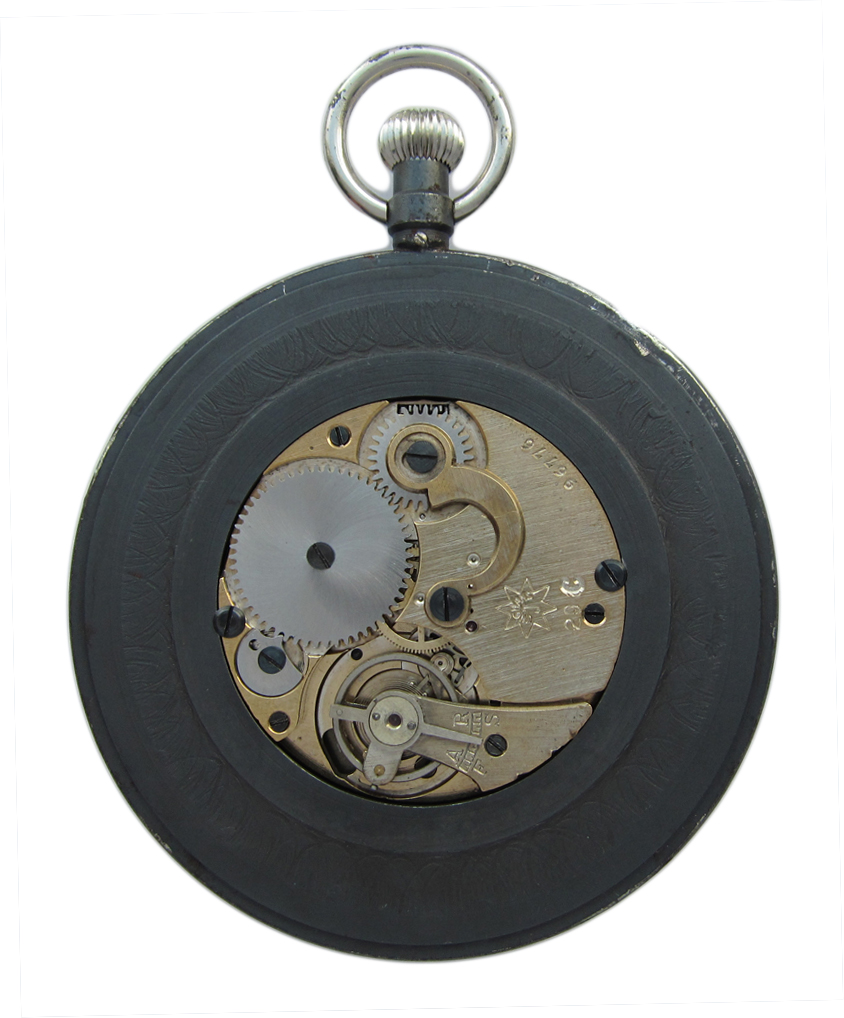
The J29C is a restamped J29a which was built from February 1944 for the German Navy as a special submarine hunting timing watch in an 71 mm case. The following pictures are courtesy of F. Fügemann. The watches with the "U-Jagd" stamp on the dial so far have serial numbers in the 93xxx to 97xxx range. More explanation about the dial you can find here: http://www.knirim.de/a0501mod.htm | |
 |  |
 |  |
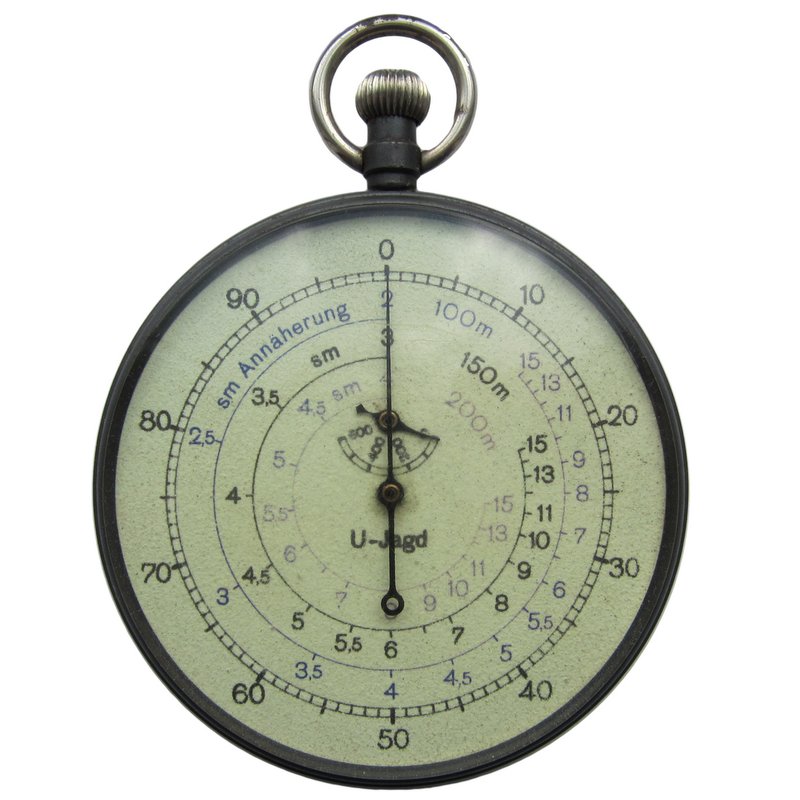 |  |
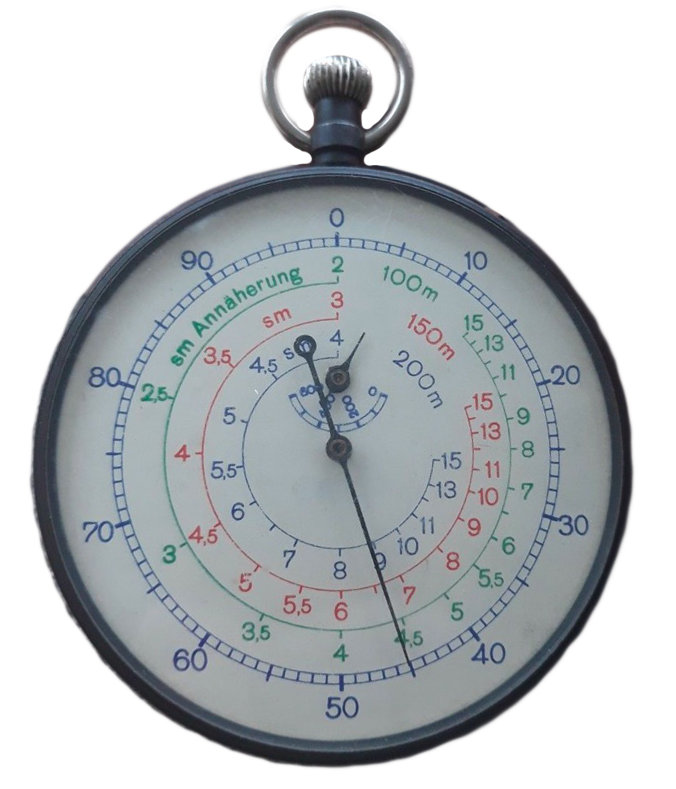
With this J29c watch, the approach speed was determined. The dial of a U-Jagd timing watch has a 1 to 100 second division on the outer edge. Towards the center are three circles for distance, 100, 150 and 200 meters. These are divided into nautical miles (sm). The watch itself is started during an "E-Messung" of the so-called "S-Gerät" (special device for active sound localization - originally developed for the detection of mines). Once the distance has decreased by 100, 150 or 200 meters, the clock is stopped and immediately on the relevant scale the approach speed in sm/hr can be read. The approach speed compensated with the own speed gives the speed of the tracked submarine. According to special specifications the watch was available with special dial illuminating. | 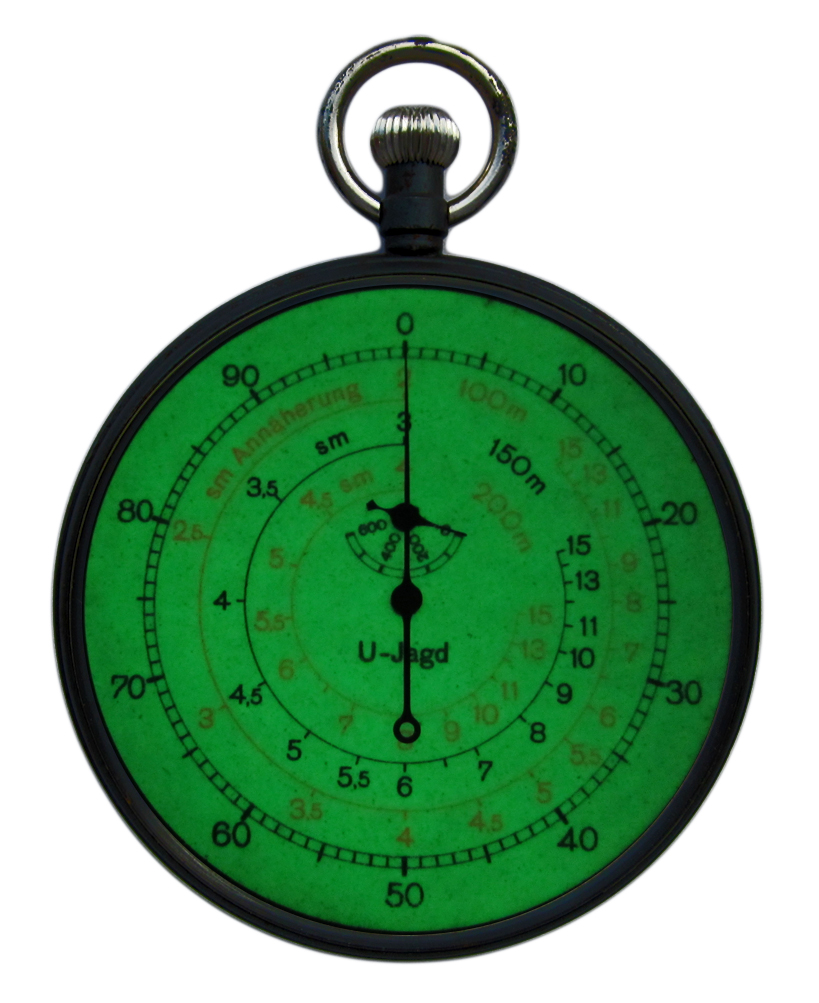 |
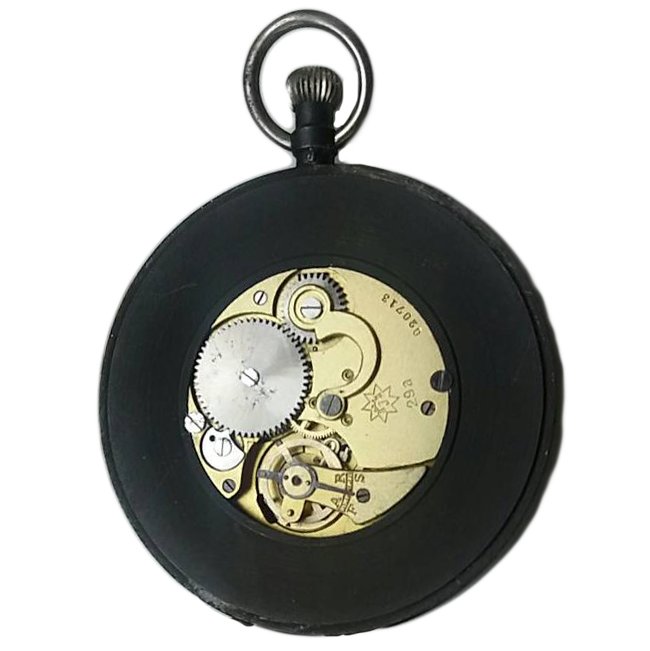
A dial seen without the "U-Jagd" signauture has a normal J29a movement with a 20xxx serial number. A prototype? Maybe? Pictures courtesy of Stefanovic Viktorija. | |
 |  |
A handy hint by F. Fügemann was the Bergeon Presto 4 tool which makes accident free hand removal possible.